The question of how to carry water on a mountain bike feels like it should have a simple answer. It doesn't, because the right answer depends on the kind of riding you do, the climate, the trail length, and a few preferences that aren't obvious until you've tried each option a few times.
Here's the honest comparison.
The three options (and the fourth nobody talks about)
There are really three mainstream answers, plus one underrated option that's become more popular in the last few years.
Water bottle in a frame cage. The classic. One or two bottles mounted to your bike frame. Easy to grab, easy to refill, costs almost nothing.
Hydration pack on your back. A backpack with a bladder and a drinking hose. Holds 1.5 to 3 liters of water plus storage for tools, food, and layers.
Hip pack with bottle. A pack that sits on your hips with one or two bottles in stretchy holders. Holds tools, snacks, and a phone, plus the water in the bottles.
Hip pack with bladder. Less common but growing. A hip pack with a small reservoir built in, drinking hose routed up to the front.
Each option has clear strengths and weaknesses. The question isn't which is best but which is best for the riding you actually do.
Water bottle in a frame cage
Best for: Short to medium rides (under 2 hours), warm but not extreme temperatures, riders who don't need to carry much else.
Pros:
- Easy to grab and drink while pedaling
- No weight on your back
- Cheap — most bikes have at least one cage mount
- Easy to refill at trailheads
- Stays cool longer than water on your back
Cons:
- Limited capacity (one or two bottles, ~24 oz each)
- Bottles can bounce out on rough terrain (use a side-entry cage or a bottle retention strap for chunky trails)
- Doesn't solve the carrying tools and snacks problem
- Hard-tail mountain bikes often only have room for one bottle inside the front triangle
- Modern full-suspension bikes with short reach or compact frames sometimes can't fit a bottle at all
The honest truth: for many riders on most rides, a single water bottle is enough. A 24-ounce bottle is roughly 90 minutes of water in moderate conditions. If your ride is shorter than that, you don't really need a hydration system — you need a bottle.
Hydration pack on your back
Best for: Long rides (2+ hours), hot conditions, technical terrain where you don't want to take your hands off the bars to drink, riders who carry significant gear.
Pros:
- High capacity (1.5–3+ liters of water plus gear storage)
- Hands-free drinking via the hose
- Holds tools, food, layers, first aid, etc.
- Distributes weight across your back evenly when packed well
Cons:
- Hot. Sweat builds up between the pack and your back, even on relatively cool days.
- Weight on the shoulders and back, not the hips
- Water heats up faster than in a frame bottle (warmer pack = warmer water)
- More expensive ($80–$200 for a decent one)
- Bladder and hose are a pain to clean (mold is real)
- Restricts shoulder and arm movement slightly
For decades, the hydration pack was the default mountain bike water solution. Then hip packs got better, and a lot of riders quietly moved away. The hot-back problem is real, especially in summer or in humid climates, and the limited shoulder mobility annoys riders who do a lot of technical riding.
Hip pack with bottle holsters
Best for: Most casual rides in moderate conditions where you want some storage but not a full pack.
Pros:
- No heat on your back — huge comfort difference in summer
- Stable on the hips, doesn't shift during technical riding
- Holds the same tools/snacks/phone as a small hydration pack
- Lighter than a hydration pack
- Easy to drink from (grab the bottle, drink, replace)
- Bottles can come out at the trailhead for refill — no bladder maintenance
Cons:
- Lower water capacity (typically 1–2 bottles, so 24–48 oz)
- Can ride up or feel weird if not adjusted right
- Some hip packs bounce on really rough terrain — fit matters
This is the option that's quietly taking over for casual MTB riders. The combination of "tool storage without back heat" plus "bottles at hand for easy drinking" hits the sweet spot for the average 2-3 hour ride. Brands like Bontrager, EVOC, Dakine, and Camelbak all make solid hip packs in the $60–$120 range.
Hip pack with bladder
Best for: Riders who want hip-pack comfort with hose drinking and slightly more capacity.
Pros:
- All the back-heat advantages of a hip pack
- Hands-free drinking via the hose
- Higher capacity than bottle-style hip packs (1.5–2 liters typical)
Cons:
- More expensive
- Bladder maintenance (cleaning, mold)
- Slightly more bounce than a bottle-style hip pack because the water moves around the bladder
A growing category but not yet mainstream. If you love the hands-free aspect of a hydration pack but hate the back heat, this is the compromise.
The capacity question (how much water do you actually need?)
Most riders carry too much water on short rides and not enough on long ones.
Rough rule of thumb in moderate temperatures:
- Under 60 minutes: 12–20 oz (one bottle, even a small one)
- 60–90 minutes: 20–32 oz (one regular bottle)
- 90–120 minutes: 24–40 oz (one large bottle or two regular)
- 2–3 hours: 40–70 oz (1.5L bladder or two large bottles)
- 3+ hours: 70 oz+ AND a plan to refill somewhere
In hot conditions, double these numbers. In genuinely hot conditions (90°F+ in direct sun), triple them, and pack electrolytes.
The mistake most beginners make: carrying a 3-liter hydration pack on a 45-minute ride. You don't need that much water. The pack weighs you down, you don't drink half of it, and you've made the ride less fun for no benefit.
The mistake most intermediate riders make: thinking they can ride longer than they can on a single 24-oz bottle. By hour two of a hot ride, that bottle is gone and so is your judgment.
What about food?
Worth a quick note since water capacity often dictates food capacity (whatever pack you choose for water also handles snacks).
For rides under 90 minutes, you probably don't need food. For 90 minutes to 2 hours, an energy bar or two is plenty. Past 2 hours, you should be eating something every 45–60 minutes — bars, gels, real food, doesn't matter, just keep the calories coming.
Any hip pack or hydration pack with reasonable storage handles this. A bare-bottle setup doesn't — which is the main reason some riders carry a hip pack even for shorter rides where a bottle would do for water.
The honest recommendation
If you're starting from zero and need to pick one setup:
Most casual MTB riders should own a hip pack with bottle holsters. It handles 80% of rides comfortably, no back heat, easy to drink from, easy to maintain. Add a second bottle in your bike's frame cage on hot or long days.
If you do regular long rides (3+ hours) in hot conditions, add a hydration pack to your kit. You'll use it less often than you think, but when you need it, nothing else works.
If you only ever ride for under 90 minutes, a single water bottle in a frame cage is genuinely fine. Don't overcomplicate it.
The single biggest hydration mistake isn't picking the wrong system — it's not drinking enough during the ride regardless of which system you have. Most riders drink less than half what they should, even with water immediately available. Sip every 10–15 minutes. Don't wait until you're thirsty; by then you're already behind. The pack or bottle is a tool. You still have to use it.
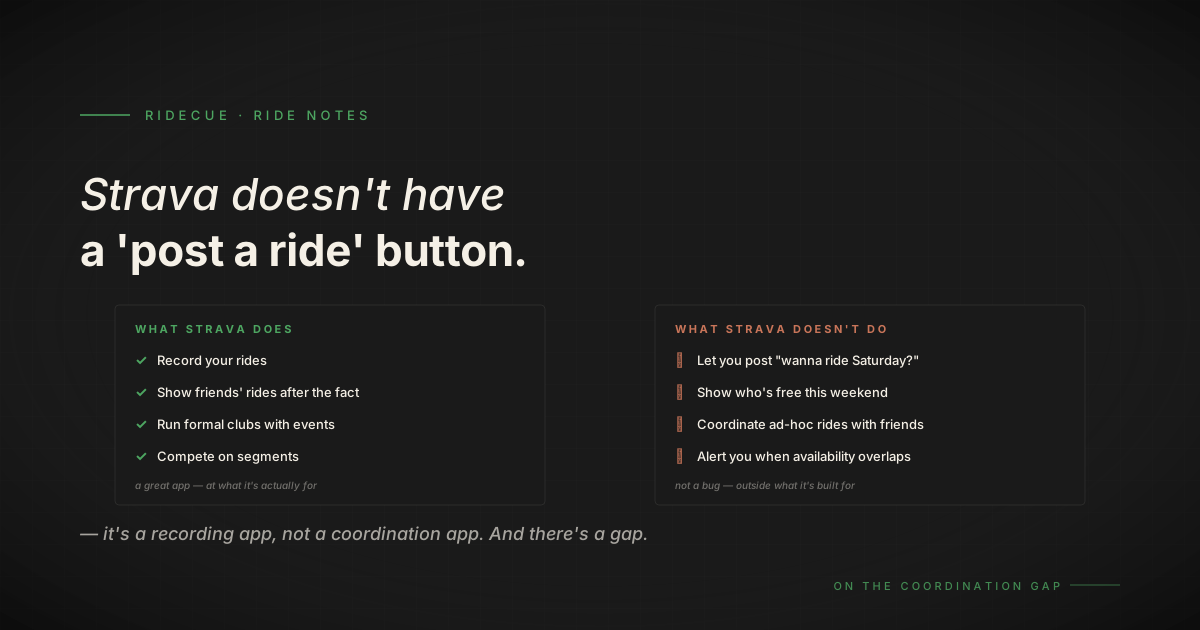
Planning a long ride with your crew? RideCue is a free PWA built for small riding groups — coordinate availability, see overlap, propose rides. Three minutes to set up.